
 https://ustl.com/wp-content/uploads/2026/10/Close-up-view-of-a-label-machine.jpg
1250
2000
AbstraktMarketing
https://ustl.com/wp-content/uploads/2026/10/October-2026-Logo-300x133.jpg
AbstraktMarketing2026-10-12 13:15:512026-10-12 13:15:56Why Labeling Equipment Parts Availability and Service Expertise Should Shape Your Next Purchase
https://ustl.com/wp-content/uploads/2026/10/Close-up-view-of-a-label-machine.jpg
1250
2000
AbstraktMarketing
https://ustl.com/wp-content/uploads/2026/10/October-2026-Logo-300x133.jpg
AbstraktMarketing2026-10-12 13:15:512026-10-12 13:15:56Why Labeling Equipment Parts Availability and Service Expertise Should Shape Your Next PurchaseWhat Your Labeling Equipment Is Trying to Tell You
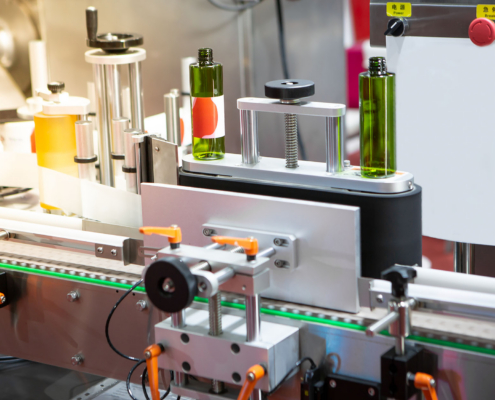
Different issues with labeling equipment point in different directions, and diagnosing the situation correctly is what separates a cost-effective repair call from good money chasing bad. Some signals point to routine component wear that a targeted fix will resolve cleanly. Others suggest a system that has reached or is approaching the end of its economically useful life.
Inconsistent Output and Application Quality
Skewed labels, faded print, and recurring barcode errors that seem to come and go are among the most common early warning signs from a label machine. These problems often trace back to worn mechanical components. A structured maintenance schedule is the most reliable way to catch component wear before it turns into a real production problem. When inconsistencies persist after standard cleaning and calibration, a targeted component inspection will tell you whether the fix is manageable in place or something more significant is happening.
Increasing Downtime and Repair Frequency
A single breakdown is not cause for alarm on a piece of labeling equipment that has otherwise run reliably for years. The concern is if the same system requires service every few months. At this point, the cumulative cost of those interventions may begin to approach a number worth comparing against replacement. Tracking both the frequency and total cost of repairs over a rolling 12-month window gives you the clearest picture of where the trend is heading.
Parts Availability and Manufacturer Support
Label printer repair becomes significantly more complicated when the components you need are no longer stocked by authorized distributors or supported by the manufacturer. Label printer parts availability is one of the clearest signals that a repair path is still viable long-term. On the other hand, a system where every service call requires extended sourcing, custom fabrication, or non-OEM substitution is one that is approaching the end of its practical service life regardless of how well it runs between failures.
When Repair Is the Smarter First Move
Not every problem with a label applicator machine is a reason to replace it. When repair cost falls comfortably below the replacement value of the equipment and the underlying system is still mechanically sound, a targeted fix almost always makes more financial sense than a full swap.
Label-Aire and CTM applicators are built for long service lives, and OEM replacement parts for many of their systems are available through authorized distributors, which keeps the repair path predictable and reasonably priced.
The repair-first approach also holds up strongly when the labeling system still fits your current production requirements. If your line speed, container type, and label format have not changed materially since the system was installed, you are not asking the machine to do something it was not designed for. Repairing in that context preserves equipment that is already calibrated and integrated into your production line.
Signals That Point Toward Replacement
At some point, the math shifts, and continuing to repair labeling equipment stops being the more practical investment. These are the factors that most reliably indicate replacement is the better path forward.
- Repair cost approaches or exceeds half the replacement value. When a single repair, or a combination of pending ones, approaches that level, the economics of keeping the existing label applicator in service begin to break down. A replacement also comes with a manufacturer warranty and a full reset on component wear, both of which add real value that a repair cannot restore.
- Production requirements have outgrown what the equipment was built for. When line speed, container format, or label type has shifted significantly since the system was installed, retrofits and modifications can sometimes close the gap, but they add cost and mechanical complexity. In many cases, choosing new labeling equipment built around your current production profile is more efficient than engineering workarounds.
- Parts are no longer available through authorized channels. When OEM components are discontinued or require long lead times to source, every repair becomes a scheduling risk on top of a financial one. Substituting non-OEM components may solve the immediate problem but can introduce compatibility issues and will often void remaining warranty or service coverage.
- Breakdowns have become chronic rather than occasional. Investing in a label applicator machine is a significant operational decision, but it can become the more rational one when the alternative is building production schedules around what a machine might do rather than what it is supposed to do. Chronic unplanned downtime carries a compounding cost in lost throughput and emergency service calls.
Knowing whether to repair or replace is easier when you have a partner who can help with either path. U.S. Tape & Label’s full labeling equipment offering includes OEM replacement parts for Label-Aire and CTM systems alongside new, used, and rental equipment.
How to Think Through the Numbers
The repair vs. replace decision has a financial dimension worth working through explicitly rather than estimating. Two factors carry most of the weight.
The Repair Cost Threshold
A commonly used guideline in equipment management is that a repair costing more than 50 percent of the machine’s current replacement value generally makes replacement the more rational choice. The specific number matters less than the framework. The goal is to avoid spending a substantial portion of what a new or used label applicator machine would cost on a system that is likely to need the next repair before long.
Age, Capacity, and What Comes Next
An aging labeling system that still meets today’s production needs can remain a reasonable candidate for continued repair investment, but the calculation changes when growth is on the horizon. Spending significantly on the current system means spending again sooner than planned if your facility expects to add SKUs, increase line speed, or move to different container formats within the next few years. Buying another two years of production from a system with limitations is worth comparing honestly against what a new installation would cost and enable.
Talk to U.S. Tape & Label About Your Equipment Situation
U.S. Tape & Label is an authorized distributor for Label-Aire, CTM, Pack Leader, and SATO labeling equipment, which means we can help on both sides of this decision. Whether you need OEM replacement parts to bring your current system back up to speed or you are ready to evaluate new, used, or rental options for your production line, our team is ready to assist.
Reach out today to talk through your equipment situation and find the path that makes the most operational and financial sense for where your production line is right now.
https://ustl.com/wp-content/uploads/2026/10/Close-up-view-of-a-label-machine.jpg
1250
2000
AbstraktMarketing
https://ustl.com/wp-content/uploads/2026/10/October-2026-Logo-300x133.jpg
AbstraktMarketing2026-10-12 13:15:512026-10-12 13:15:56Why Labeling Equipment Parts Availability and Service Expertise Should Shape Your Next Purchase https://ustl.com/wp-content/uploads/2020/03/P1010102_Large-spool-of-labels-being-printed-at-a-high-rate.jpg
1250
2000
AbstraktMarketing
https://ustl.com/wp-content/uploads/2026/10/October-2026-Logo-300x133.jpg
AbstraktMarketing2026-06-03 17:31:462026-06-03 17:31:49What Is a Semi-Automatic Labeling Machine?
https://ustl.com/wp-content/uploads/2020/03/P1010102_Large-spool-of-labels-being-printed-at-a-high-rate.jpg
1250
2000
AbstraktMarketing
https://ustl.com/wp-content/uploads/2026/10/October-2026-Logo-300x133.jpg
AbstraktMarketing2026-06-03 17:31:462026-06-03 17:31:49What Is a Semi-Automatic Labeling Machine? https://ustl.com/wp-content/uploads/2026/01/Label-Printer-Repair-and-Maintenance-How-to-Prevent-Downtime-Before-It-Starts.jpg
1250
2000
AbstraktMarketing
https://ustl.com/wp-content/uploads/2026/10/October-2026-Logo-300x133.jpg
AbstraktMarketing2026-01-05 14:24:582026-06-02 15:27:00Label Printer Repair and Maintenance: How to Prevent Downtime Before It Starts
https://ustl.com/wp-content/uploads/2026/01/Label-Printer-Repair-and-Maintenance-How-to-Prevent-Downtime-Before-It-Starts.jpg
1250
2000
AbstraktMarketing
https://ustl.com/wp-content/uploads/2026/10/October-2026-Logo-300x133.jpg
AbstraktMarketing2026-01-05 14:24:582026-06-02 15:27:00Label Printer Repair and Maintenance: How to Prevent Downtime Before It Starts https://ustl.com/wp-content/uploads/2021/10/Close-up-side-view-of-a-label-printing-machine.jpg
1250
2000
AbstraktMarketing
https://ustl.com/wp-content/uploads/2026/10/October-2026-Logo-300x133.jpg
AbstraktMarketing2025-11-10 22:32:122026-06-02 15:27:00The Ultimate Label Equipment Maintenance Checklist
https://ustl.com/wp-content/uploads/2021/10/Close-up-side-view-of-a-label-printing-machine.jpg
1250
2000
AbstraktMarketing
https://ustl.com/wp-content/uploads/2026/10/October-2026-Logo-300x133.jpg
AbstraktMarketing2025-11-10 22:32:122026-06-02 15:27:00The Ultimate Label Equipment Maintenance Checklist https://ustl.com/wp-content/uploads/2025/11/Labeling-Equipment.jpg
1250
2000
AbstraktMarketing
https://ustl.com/wp-content/uploads/2026/10/October-2026-Logo-300x133.jpg
AbstraktMarketing2025-11-10 13:32:022026-06-02 15:27:01How To Select and Purchase the Ideal Labeling Equipment for Your Business
https://ustl.com/wp-content/uploads/2025/11/Labeling-Equipment.jpg
1250
2000
AbstraktMarketing
https://ustl.com/wp-content/uploads/2026/10/October-2026-Logo-300x133.jpg
AbstraktMarketing2025-11-10 13:32:022026-06-02 15:27:01How To Select and Purchase the Ideal Labeling Equipment for Your Business